Accompanying, not directing.
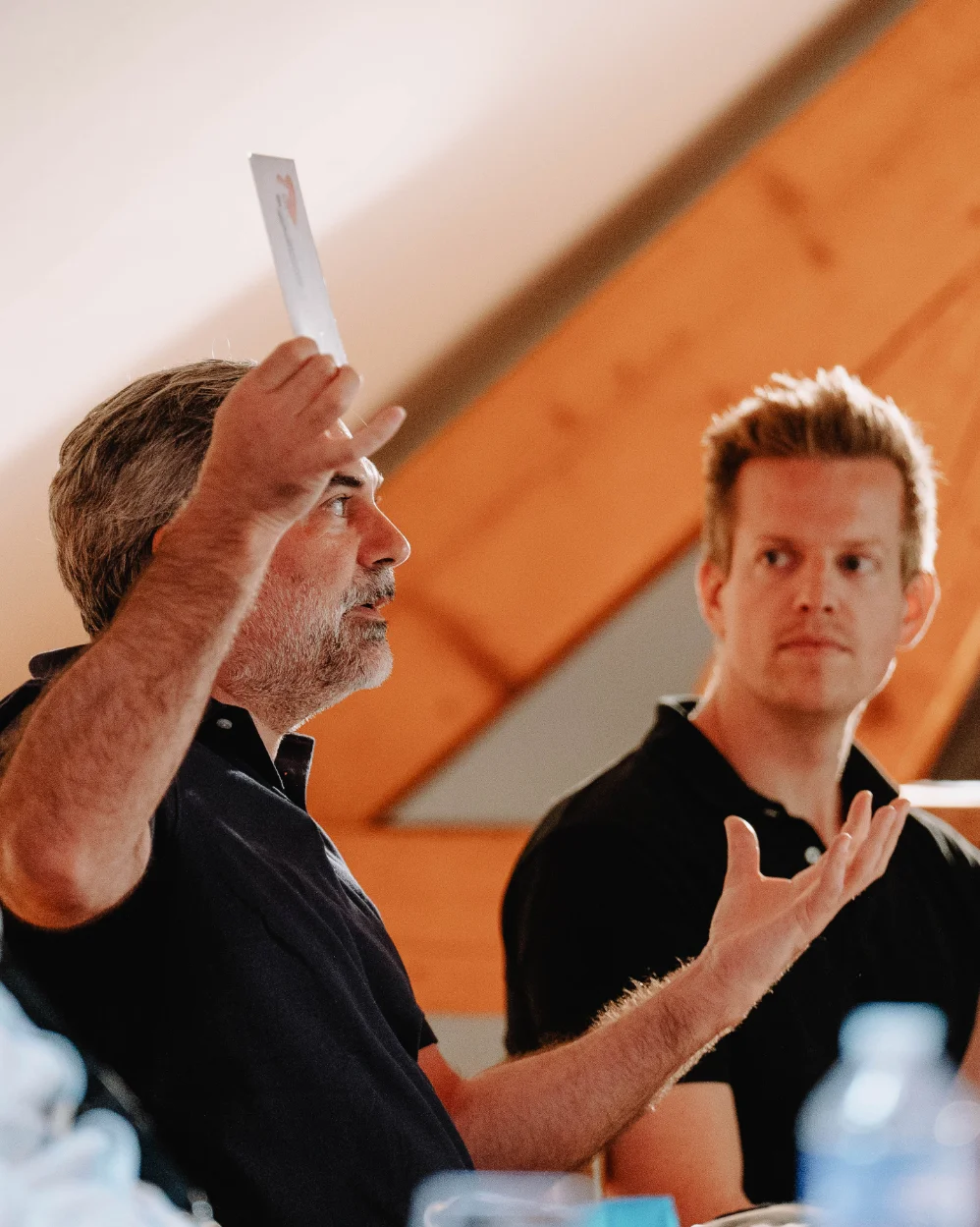
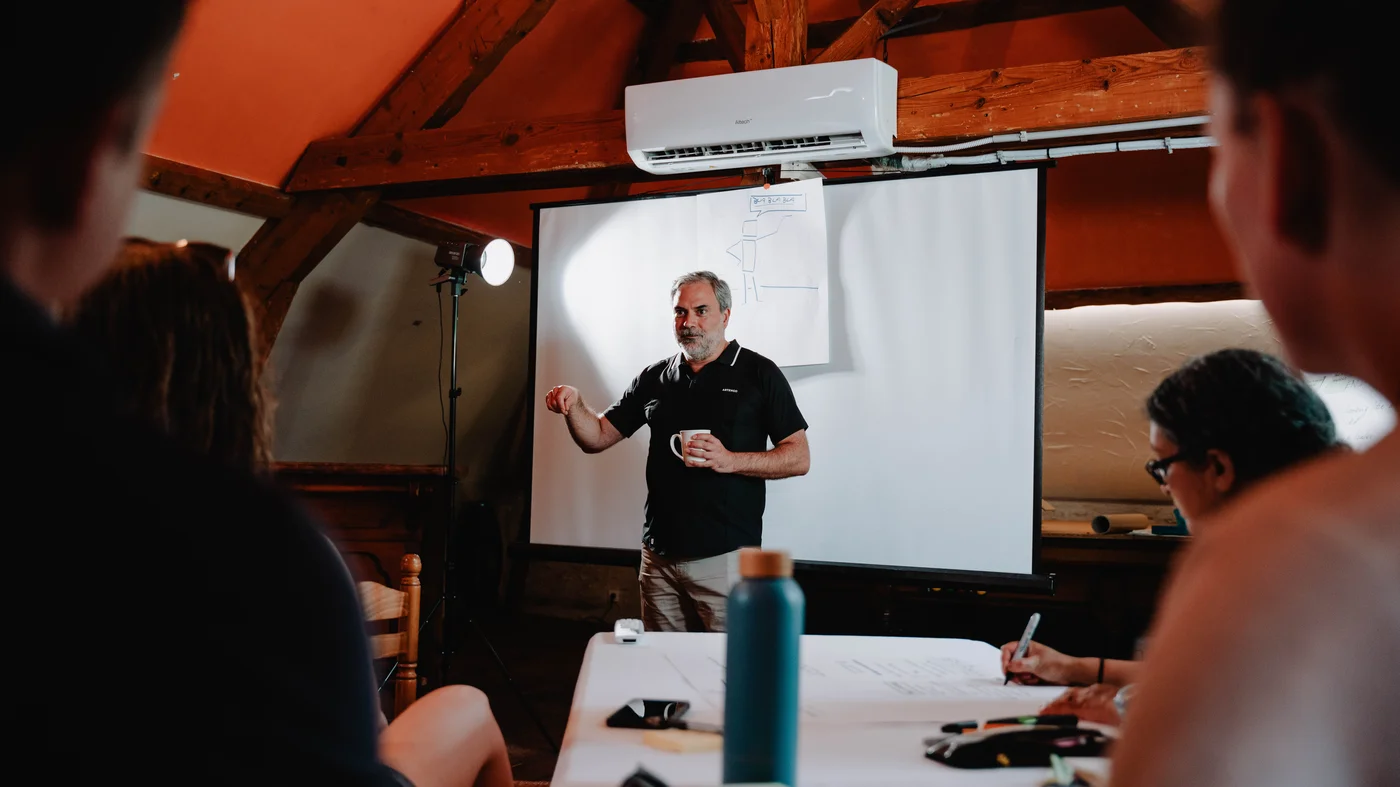
Facilitating means being a guide: asking the right questions, holding the space, making sure everyone can contribute and every idea is respected, while knowing when to refocus the conversation. That posture, combined with twenty years of method, is what turns a group of busy people into a productive collective intelligence.
Seven convictions, at the service of your challenges
Iteration
Advance through successive prototypes. Favor "good enough for now" to get feedback fast and adjust.
Visualization
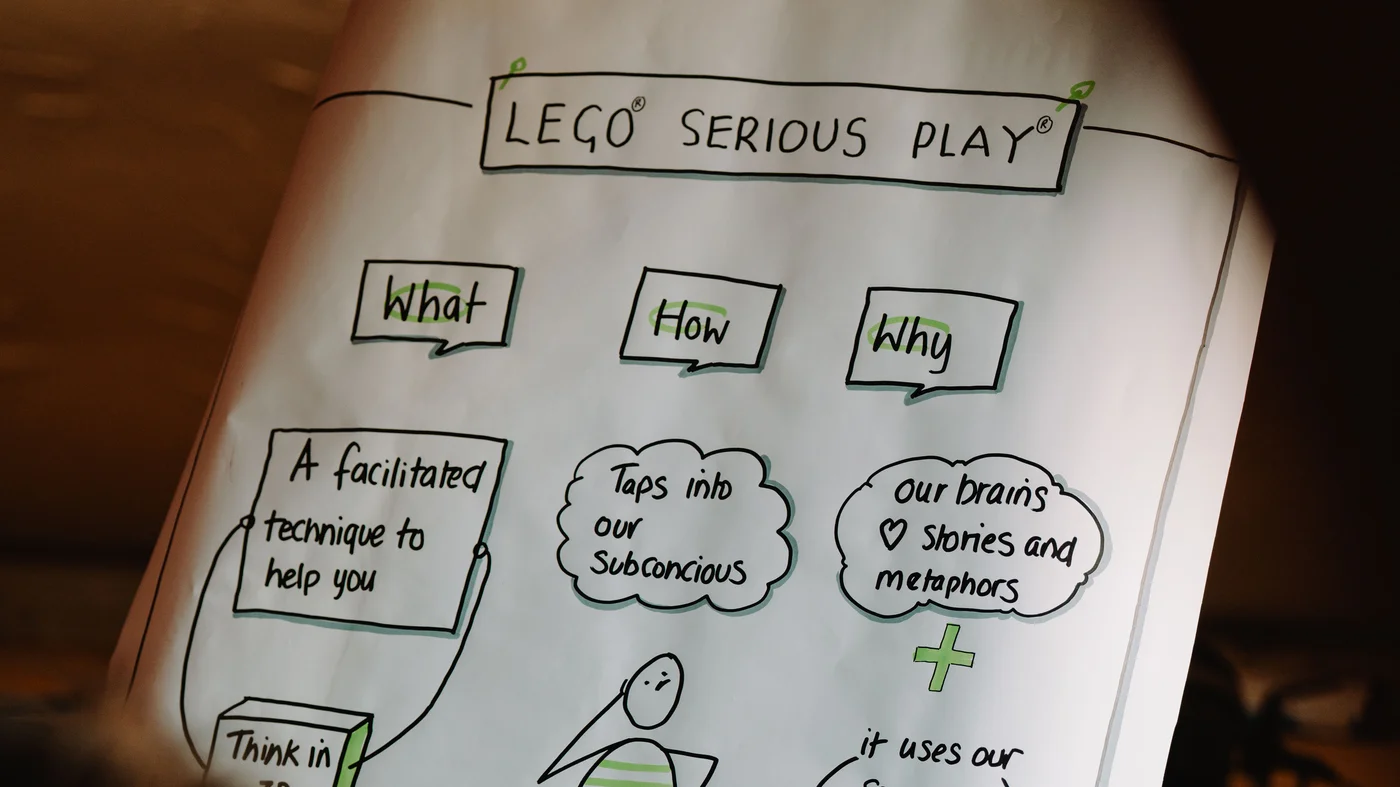
Give ideas a shape through shared visuals, so everyone understands them, and owns them.
Play
Create a relaxed environment where mistakes are accepted, the soil where creativity and innovation grow.
Action
Progress fast, produce concrete and impactful results. Every project addresses a real challenge.
Intention
Ground every solution in objectives and constraints, with meaning at every step.
Alignment
Mobilize all stakeholders to integrate different perspectives and strengthen the relevance of solutions.
Agility
A flexible approach, drawing on evolving methodologies, solid values and proven expertise.
A methodological panorama, not a single recipe
My roots are in Lean Startup and the Design Sprint. Over twenty years I have built deep expertise across the landscape of collaborative methods, and I keep testing new ones to stay at the edge of the practice.
I facilitate workshops of every size and duration: from a few hours with an agile team to several days with up to 80 participants. What stays constant is the way each session is designed: as a production flow that moves the group toward a deliverable, never as a sequence of animation tricks.
Canvases are a good example: I use well-known formats, adapted ones, or entirely new ones designed for your context, whatever serves the work, not the method.
Lean Innovation at Scale: a framework I co-created with a multinational for their innovation transformation across several markets.
"It's not directing. It's accompanying."What facilitation means to me
Four phases, one production flow
Whether your project is a single workshop or a multi-month strategy mandate, it follows the same backbone. Each phase has explicit objectives, activities and deliverables, you always know what you get and when.
Understand deeply
Objectives: grasp the stakes, history and current state.
Activities: sponsor alignment meetings, targeted interviews, analysis of existing material.
Deliverables: shared understanding, analysis report when relevant.
Define and converge
Objectives: surface implicit knowledge, align all stakeholders.
Activities: collaborative workshops designed for your context and participants.
Deliverables: shared knowledge, convergence toward the final outputs.
Shape the results
Objectives: turn workshop material into structured drafts.
Activities: capture, formalize, iterate between sessions.
Deliverables: consolidated drafts in the format that serves you (Word, PDF, Miro…).
Deliver and validate
Objectives: complete the deliverables and have stakeholders validate them.
Activities: final writing, validation rounds.
Deliverables: final documents, ready to be acted on.
Phase names adapt to each project (Immerse / Deepen / Structure / Finalize, Align / Design / Facilitate / Deliver…), the logic of discovery → convergence → production → validation stays.
Careful preparation is the key to a successful workshop
Collaborative workshops are key moments involving many people. Their success rests on meticulous preparation: defining objectives, aligning the sponsor team, structuring the flow. I always run one or two preparation meetings with your sponsor team before any session.
What I bring
- The session design, tested and timed
- All consumables: post-its, pens, printed canvases and templates
- The facilitation itself, and the consolidation afterwards
What you provide
- Screens, paperboards, whiteboards
- The room and invitations to participants
- Your expert knowledge of the subject, I structure, you know
The room we need
- Modular, with movable tables
- Big enough for everyone to have space and circulate
- To avoid: a fixed central meeting table with no room to move
- Goal: a creative environment that invites movement
Collaborative, wherever you are
Workshops can be run on-site or remotely. I have strong experience designing and facilitating remote collaborative sessions, reinventing how digital tools are used for visual production, content management and group dynamics.
Always adapted to your internal IT policies.
Curious how this would apply to your challenge?
Every engagement starts with a conversation about your situation, not a sales pitch.
Start the conversation